
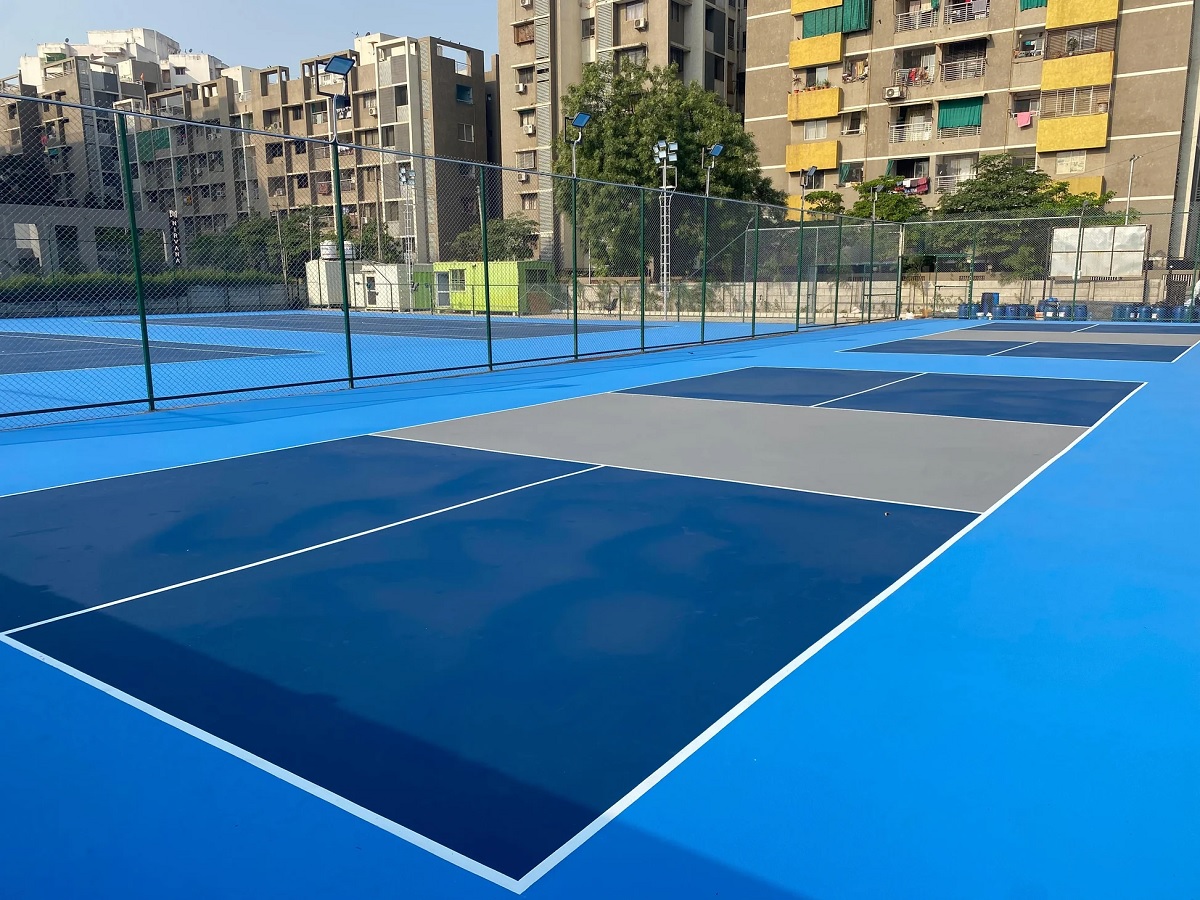

Choosing a synthetic surface is one of the most important decisions in any sports facility construction project. The right system should support the intended sport, level of use, climate, maintenance program and long-term goals of the facility. A surface that performs well in one environment may not be suitable for another, so the decision should be based on the complete needs of the project rather than appearance alone.
Start with the sports being played
Different sports place different demands on a surface. Football requires traction, impact performance and predictable ball roll, while hockey generally needs a faster and more uniform playing surface. Tennis, netball, basketball and athletics each have their own performance requirements.
Multi-use facilities require an additional layer of planning. The surface needs to provide a practical balance between the sports being accommodated without compromising the field’s primary purpose. Identifying the priority sport early helps guide decisions around fibre type, pile height, infill, shock pads and line marking.
Consider the level of competition
A recreational facility may have different requirements from a venue used for organised competition. Governing bodies often set performance standards covering areas such as traction, ball behaviour, surface evenness and shock absorption.
For competition venues, the synthetic system should be selected with these requirements in mind from the beginning. It is much easier to design the right system during sports facility construction than to make major changes after installation.
Match the surface to expected use
Usage levels can vary significantly between facilities. A school oval used several times a week has different demands from a community venue hosting training every evening and competitions throughout the weekend.
High-use facilities need surfaces designed for durability and repeat use. The overall system, including the base, drainage, shock pad and infill, must work together to maintain performance over time. Selecting a surface solely because it has a lower upfront cost may lead to greater maintenance or replacement costs later.
Think about climate and drainage
Local weather conditions should influence surface selection. Heat, heavy rain, frost and prolonged sunlight can all affect how a facility performs and how often it can be used.
A well-designed drainage system is especially important for outdoor fields. Water should move efficiently through the surface and base so the field can return to play quickly after rain. The synthetic surface must also be compatible with the drainage design beneath it.
Review maintenance requirements
Synthetic surfaces are lower maintenance than many natural alternatives, but they are not maintenance-free. Different systems require different levels of brushing, cleaning, infill management, inspection and repair.
Before choosing a surface, facility managers should consider who will maintain it, what equipment is available and whether the maintenance schedule is realistic. A surface will only deliver its intended lifespan and performance if it is properly cared for.
Look at whole-of-life value
The lowest installation price does not always represent the best value. A stronger comparison considers expected lifespan, maintenance costs, warranty conditions, performance retention and eventual resurfacing requirements.
The right surface for sports facility construction is one that meets current needs while supporting the facility’s long-term use. Careful planning at the beginning can result in better performance, fewer disruptions and a more reliable sporting asset.
Comments are closed.