
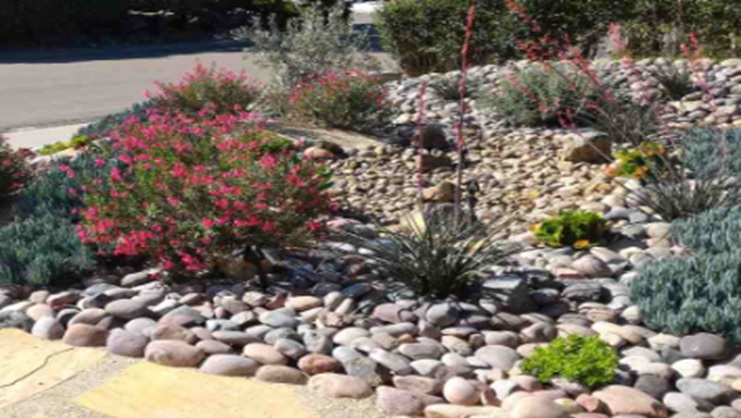

Large rocks can be used in your landscape to command the natural attractiveness, texture, and visual appeal of an outdoor space. Whether a rock garden, stone retaining, or just decorative touches, laying large rocks requires planning and execution. Follow the steps in this blog post on how to effectively lay large rocks for landscaping to achieve a stable and visually appealing result.
1. Planning and Design
Before you start lugging rocks around you’ll need a rough plan:
- Measure the space: Get a good close look at the area you’re gonna put the rocks in. You want to consider the scale, proportion, and forms already present in nature. Notice slopes, drainage issues, existing plants, and structures that may affect your design.
- Design Layout: Outline how you would include the presence of big rocks in your landscape. Decide on the placement functions and layout in a functional and artistic way. You may want to consider how the rocks will mix with other elements such as plants, pathways, and water features.
2. Choosing the Right Rocks
Choosing the best stone is essential for a desired look and function:
- Size and Shape: Try to use rocks that harmonize with size within your landscape. Larger, irregularly shaped rocks will tend to look more natural while uniformly shaped rocks work better in highly structured designs, such as retaining walls.
- Material: Rocks like granite, limestone, and sandstone will all be present with different textures and colors. Choose a material that satisfies your design conceptualization and suits your climatic and soil conditions.
3. Preparing the Site
Proper site preparation will ensure the stability and longevity of your rock placement:
- Clear the Area: Clear any debris, grass, or plants from the area where you will place your rocks. This clears a good surface to work on.
- Level the Ground: Level the ground that the rocks are to sit on for a firm base. Get in there with some kind of shovel, rake, or simply some kind of leveler and ensure the base is nearly flat. If you are setting a rock wall or a more massive structure, you might be called to dig a trench to add some strength support to the structure in future work.
4. Placing Rocks
To achieve a stable and natural look, it is important to strategically place the rocks:
- Use Heavy Equipment: Large rocks, of course, can be heavy and may be hard to place. Use at least a wheelbarrow or dolly, and sometimes even a machine like a skid steer or crane in order to place them safely and efficiently. Be sure to have enough help if you plan on placing the rocks by hand.
- Placement: Put the largest rocks first in their general locations following your plan. Incline the rocks slightly backward to fit well and be easily drained. Slightly embed each rock into the ground for extra stability and a more natural look.
- Layering and Spacing: This applies to rock walls or tiered designs where the laying of the rocks is done in layers. Every layer must be stabilized before the other can be placed on top. Fill gaps between the rocks—space with small stones or gravel—to give support, so movement won’t occur.
5. Finishing Touches
Finally, add the finishing touches to blend the rocks cohesively into your landscape:
- Backfill and Compact: Fill up with soil or gravel around the rocks and compact it to hold them in place. It prevents air pockets from forming and the rocks from settling properly.
- Planting: Enhance the aesthetics even further by planting around the rocks. Around the rocks, planting with ground covers, shrubs, or flowers of the choice that blend with the rock features, brings color and texture to the landscape.
- Mulching: Mulch around the base of the rocks to help retain the moisture, suppress weeds, and give it a finished look.
Conclusion
It can be the difference between a better-looking and more functional outdoor space when you install large landscape rocks. A well-planned design, the right rock chosen, proper site preparation, and correct placement will ensure you can shape the most attractive, long-lasting, and healthy landscaping features. Whether it be a garden enhancement, retaining wall, or focal point, these steps will help ensure your project is not only a successful one but also one of aesthetic beauty.
This post was written by a professional at 345 Landscaping. 345 Landscaping in Blacksburg, Virginia, turning outdoor areas into breathtaking retreats. With over a decade of experience, 345 Landscaping offers services which include landscape and hardscape design, custom pools, retaining walls, patios, 3D designs, and lawn maintenance. Their expert team is committed to excellence, blending innovation and skill to exceed your expectations. Whether it’s creating new spaces or maintaining existing ones, 345 Landscaping ensures your outdoor space reflects your dreams. Let them transform your outdoors into stunning retreats for lasting enjoyment. Trust 345 Landscaping for unparalleled outdoor transformations. Click here to learn more!
Comments are closed.